

The New York Senate honors Dominican Consul Jesús Vásquez in event for Dominican Independence
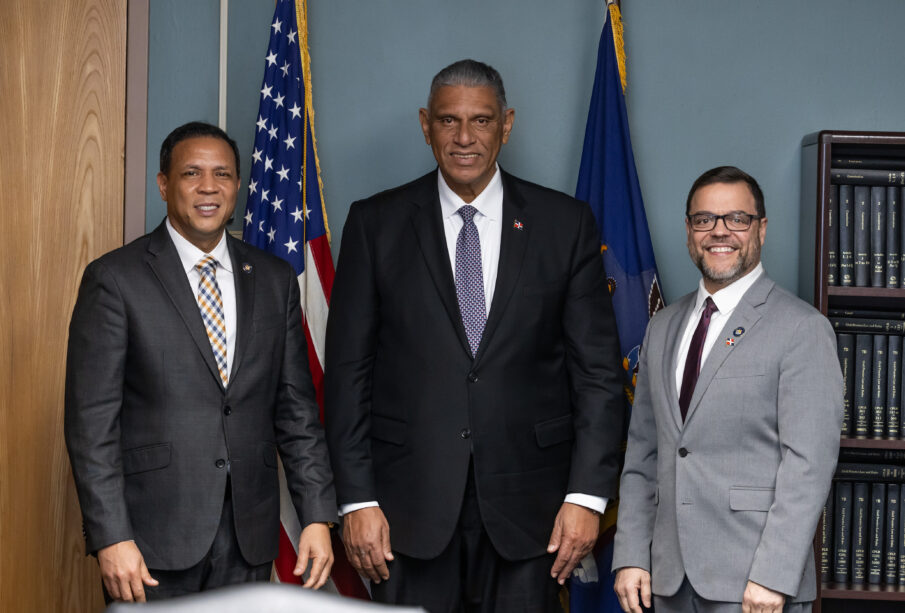


New York. In the New York State Senate, a flag can fit in a pocket, but sometimes it weighs as much as an entire country. That day, in a chamber where votes are usually counted and numbers negotiated, the Dominican community felt another measure, one that does not fit into tables or rules, the size of pride when it is spoken aloud and recognized in front of everyone.

Senator Luis R. Sepúlveda and Assemblyman George Álvarez arrived at the ceremony with the kind of solemnity that cannot be improvised. It was not another photo opportunity, nor a calendar gesture. It was the affirmation of a presence. The Dominican diaspora in New York, so accustomed to carving out its path without permission, entered that room carrying its history and a clear idea that public service can also be a form of collective care.
At the center of that moment stood the Consul General of the Dominican Republic in New York, Jesús Vásquez Martínez, known throughout the diaspora as Chu. Around him were familiar faces from the community, leaders and companions who have too often seen people forced to solve alone what institutions should resolve.
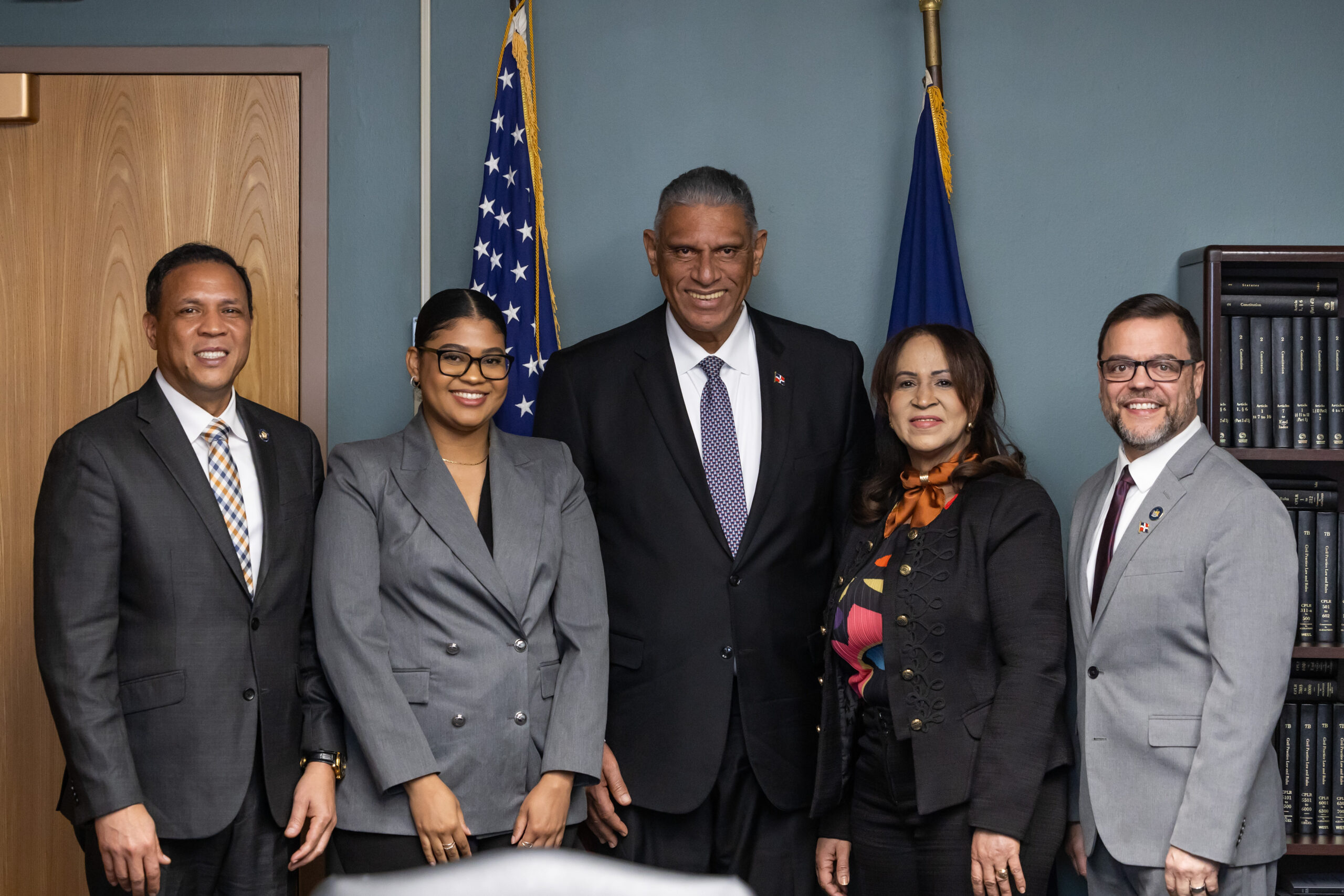
That is why the moment touched a different nerve. The recognition did not remain limited to his name. It also spoke to a deeper need, the need to be seen and served with dignity in the place where the urgencies of migrant life are processed.

Sepúlveda presented a Resolution commemorating Dominican Independence and, while doing so, made clear that the tribute went beyond protocol. In his words, the consul’s leadership had been defined by closeness and drive, by a way of exercising the office that does not remain behind a desk.
He described him as a public official who had worked toward a consulate that is more organized, more useful, more present, capable of projecting a firm image of the Dominican Republic abroad.
Since his arrival in New York in 2024, the consular office began to move with a different rhythm. Within the community, the sense began to take root that the consulate could be more than stamps and lines. Culture was spoken of as a bridge, essential services as a practical right, and community guidance as a map in a territory where the rules change and mistakes can be costly.

In that shift, the consulate began to resemble less a service window and more a place of support, encounter, and real representation for thousands of Dominicans.
Senator Luis R. Sepúlveda insisted on that point, that the institution had moved beyond its traditional function. In his account, the consular headquarters had become a point of community articulation, a space where daily concerns intersect with a broader vision.
He spoke of civic empowerment, of legal guidance, of young leadership. In essence, he spoke of the future. Because when a community learns to organize itself and understand its rights, it also learns how to protect itself.
The ceremony did not remain confined to personal praise. Dominican Independence appeared as a living memory, not as a static date. Sepúlveda recalled that, 182 years after the Dominican proclamation of independence, the country continues to show signs of institutional stability, macroeconomic discipline, and respect for the rule of law.

He did not say it as a slogan but as a framework. In that vision, economic growth, tourism, foreign investment, and the steady flow of remittances intertwine with the story of New York, where the labor of the diaspora has for decades been a quiet part of the nation’s engine.
At that point, the recognition began to resemble a mirror. By honoring the consul, the Dominican diaspora itself was being honored, a community that sustains two shores at the same time. The people who send remittances while paying rent. Those who celebrate national holidays with the same fervor with which they confront paperwork, double shifts, and bureaucratic obstacles.
Those who teach their children where they come from, even when the world pushes them to forget.
While presenting the Resolution, Sepúlveda spoke of representation and roots, of shared pride. His message left a clear impression in the chamber. It was not only about a public official. It was about what that official represents when he performs his duty well. The projection of a country, the continuity of a culture, the everyday defense of the dignity of its people.

George Álvarez, for his part, joined the moment with a tone of respect that did not seek embellishment. He said he felt honored to participate in the recognition and spoke of integrity, leadership, and a vocation for work. He emphasized a quality that the diaspora measures carefully, sustained closeness.
Not the closeness of a campaign, but the one that remains after the flashes disappear. He also highlighted the emphasis on family values and community unity, a line that for many becomes essential when migrant life threatens to fragment bonds.
There was also a reminder of the public path of Consul Chu Vásquez. Sepúlveda mentioned his trajectory in the Dominican Republic, his time in the Senate and his presidency of the chamber, his role as founder and first secretary general of the PRM, and his service as Minister of Interior and Police.
That biography, in the context of New York, was not presented as a list of positions but as accumulated experience that is now directed toward a community that demands effectiveness and respect.
The ceremony concluded with the presence of community figures such as Leonel Tangui, Luis Rodríguez, and Jairo Díaz, accompanying the consul in a moment that was more than a ceremony. It was affirmation. It was a reminder that Dominican identity in New York is not only nostalgia. It is also structure, leadership, and continuity.
Politics can often feel distant from people. That day, for a brief moment, it seemed to move closer. In the New York State Senate, Dominican Independence did not remain only a speech. It became a concrete gesture toward the diaspora and a signal that representation can be useful, human, and present when it is understood that a consulate is not just another office but a symbolic home for those who carry their country in memory and in blood.


